Where to buy
- Signed copies — Order directly from this site via the Order Print page. All copies are signed by the author.
- Coming soon — Amazon, Kindle, and other retailers (links will be added here when available).
About the Book
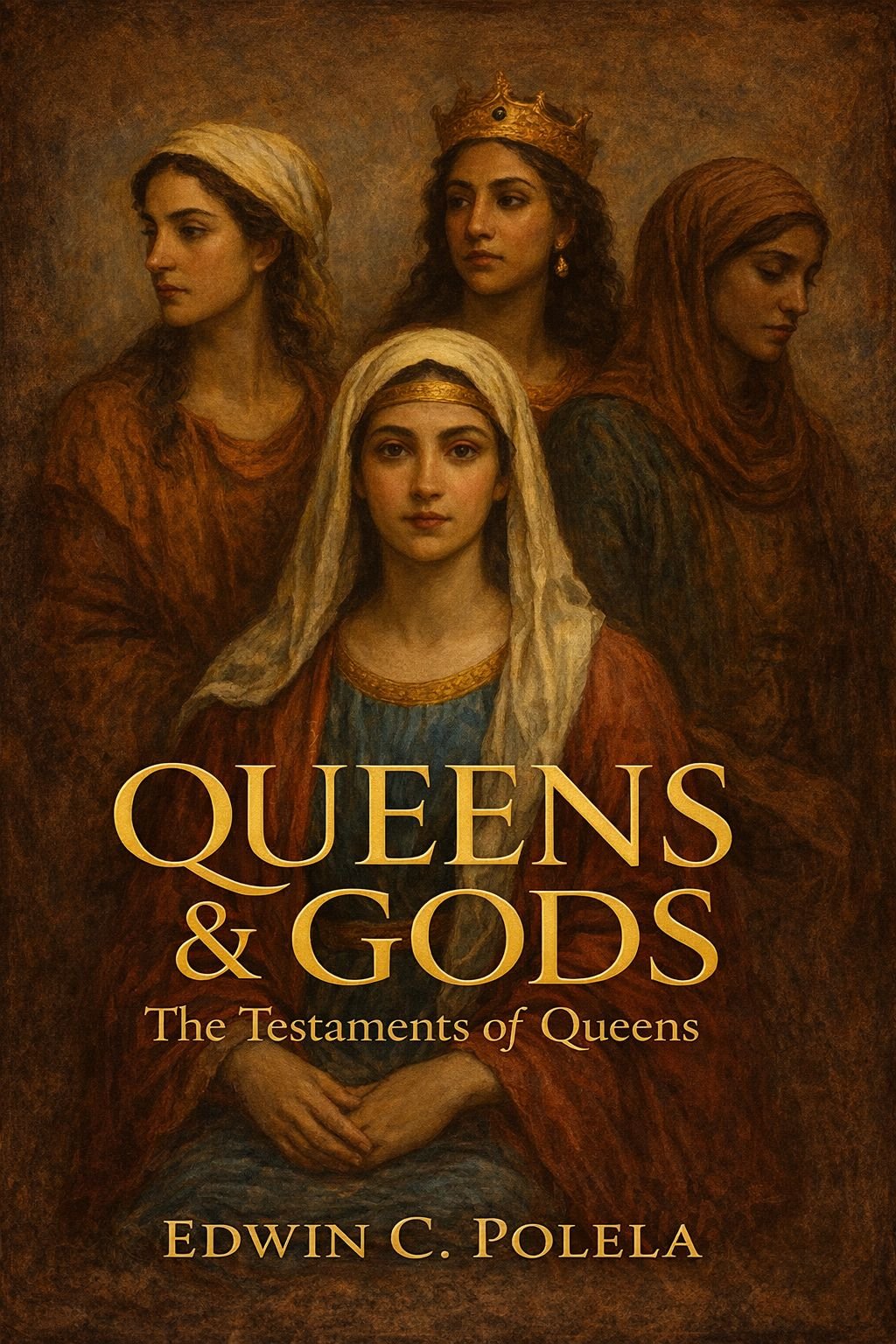
Queens & Gods is a work of imaginative reverence. It does not seek to revise Scripture, nor to argue with it, but to listen closely to what the text itself often leaves unsaid. In these pages, women who appear briefly, unnamed, or as mere footnotes in the biblical record are granted voice, interior monologue, and moral gravity.
Read more
The familiar settings of Scripture—the garden, the palace, the battlefield, the prophet's chamber—are re-entered from the margins, revealing stories shaped as much by silence as by speech.
This collection invites readers into a kind of time travel, asking what it meant to live within these sacred narratives as a woman: to be seen, desired, chosen, blamed, or forgotten; to be acted upon as often as acting; and to carry faith in a body vulnerable to power. The writing is neither corrective nor accusatory. Instead, it dwells in the emotional and spiritual spaces Scripture gestures toward but does not narrate, answering those absences with restraint, empathy, and literal care.
Each voice in Queens & Gods performs an act of re-imaging. Eve emerges not as a symbol, but as a reflective partner whose longing for wisdom carries consequence and cost. Bathsheba is rendered in her full arc—from victim to mother to political actor—bearing the weight of memory alongside authority. Abishag the Shunammite, scarcely more than a footnote in the biblical text, becomes a study in bodily commodification and erased agency. Yael of Shunem traces a faith marked by barrenness, miracle, resentment, and return. Makeda, Queen of Sheba, stands at the crossroads of race, desire, devotion, and sovereignty. Together, these testimonies expand the moral and emotional field of the biblical world without breaking its frame.
What unifies these narratives is theological seriousness. The women of this collection loved God, wrestled with God, and sometimes spoke back to God, without abandoning faith. Easy moral resolutions are resisted in favour of holy complexity, where devotion and harm, obedience and coercion, hope and grief coexist. The result is a theology that is embodied rather than abstract, one that insists God's attention does not bypass women's lives, memories, or wounds.
The timeliness of Queens & Gods is unmistakable. As contemporary readers grapple with questions of power, consent, voice, and erasure within religious traditions, this book offers a way of engaging Scripture that is neither dismissive nor naïve. It honours the text while insisting that the people within it matter fully as well. For readers fluent in the Bible, these stories will re-illuminate familiar passages; for those estranged from Scripture, they provide an entry point grounded in human experience rather than doctrinal argument.
Ultimately, Queens & Gods is an invitation—to read more slowly, to listen more carefully, and to acknowledge intently that every sacred story contains more witnesses than are named. By attending to those unseen perspectives, this collection suggests that faith itself may be deepened, not diminished, when the silenced are finally allowed to speak.